The first quarter flew by incredibly fast.
Exercise
I took a break from F45, which I’d been attending for nearly a year since January of last year. I was never the type to enjoy working out, so I always gravitated toward structured workout programs that held me accountable. F45 happened to be a great fit for me, with its good mix of cardio and strength training.
At the time, I was going to the Pangyo location with my girlfriend. But the location was a bit inconvenient, and coordinating it with my commute schedule was always a struggle, which is why I eventually stopped going.
After that break, I started going again this year at a location near my office. This time I decided to go alone, but going solo meant there were many moments when my motivation would slip.
Even though I had more time in the mornings, I’d find excuses not to go — late nights at work the day before, among other things. There was a stretch where I was genuinely exhausted, but looking back at how I used to wake up even earlier to work out last year, I realize I was just making excuses.
So starting this week, I’ve been getting back at it.
Hobbies
Since picking up a camera again in the second half of last year, I’ve been shooting a lot of video. I’m gradually color-grading the footage I shot in Tokyo last year.
There’s something wonderful about photos that capture a single moment, but I also love the way video flows past your eyes like a memory flickering by.
Super 8
About three years ago, I stumbled upon a cheap Super 8 camera at a film camera cafe and bought it.
Every now and then I get curious about a different film format — previously it was medium format, and this time it was Super 8.
(The Mamiya RB67 was too heavy to use much.)
I bought an Elmo Super 8 Sound 6000AF along with some film, but I was too afraid of wasting the film before learning how to use it properly, so it sat in my bag.
Another reason was that I couldn’t find anywhere in Korea to develop Super 8 film. I heard you’d need to send it to Pro8mm in LA for professional development.
Earlier this year, I happened to find a place in Korea that develops Super 8, and they were running a Super 8 workshop, so I joined in.
It was a short session, but I had a great time working alongside people from various backgrounds who all shared an interest in film.
We shot on a Canon 314XL that the director brought, which was much lighter than the Elmo. I couldn’t get it out of my head, so I ended up buying a Canon 514XL in good condition off eBay.
I haven’t shot much with it yet, but I plan to keep filming regularly this time.
When you buy from Japan, they always include little origami — paper cranes or stars — which is a nice touch. (The import duties on cameras, though, sting a bit.)
Daily Life
Most of my day-to-day life is actually spent at work.
After wrapping up the MyBridge monetization work in the New Business Crew last year and various ISMS-P audit preparations in the second half, I joined the Foundation Crew this year.
MyBridge
Late last year, during a week-long trip to Tokyo, I visited the Line office in Shinjuku where the MyBridge team was based.
I finally got to meet in person the people I’d only been communicating with online for over half a year. We exchanged brief greetings and even squeezed in some work discussions.
It really drove home the importance of face-to-face communication.
After meeting in person, I realized that beyond the language barrier, the overhead of online communication had been quite significant.
If we had met face-to-face at the right moments, could we have communicated faster? It might be an inherent limitation of remote communication, or perhaps we just hadn’t found a more efficient way to collaborate online.
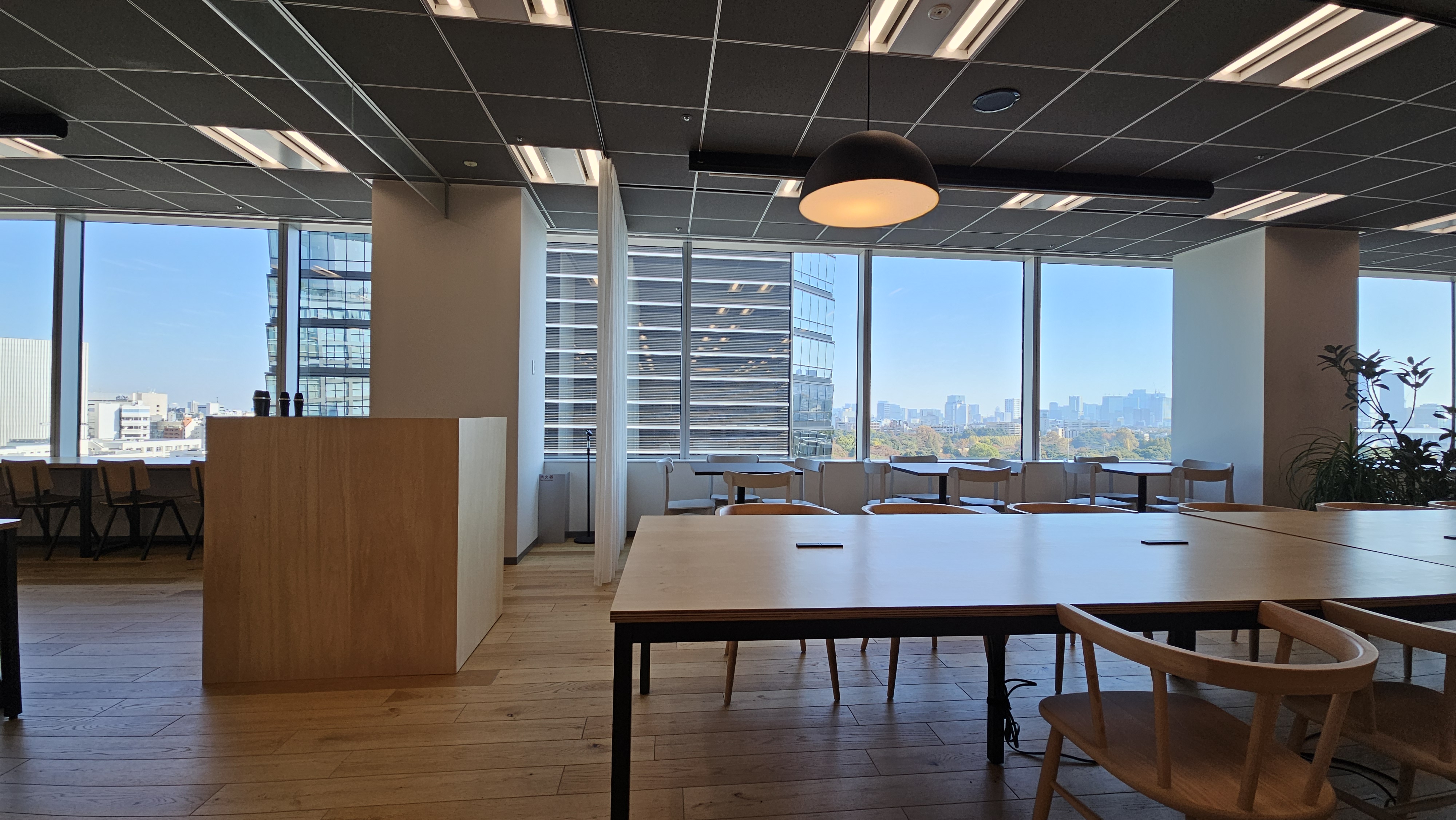
I was too shy to take proper photos, but I wanted to capture the view overlooking Shinjuku Gyoen.
That’s a story from the end of last year.
I thought that would be the last time I’d see them, but early this year the MyBridge team happened to visit Korea, and we got to meet again — this time in Korea.
I was able to meet even more team members and have deeper conversations.
It would be fun to have an opportunity to work in Tokyo someday.
An Unexpected Trip
Earlier this year, I applied for the React CONF 2024 Ticket Lottery.
React Conf 2025 | October 7-8 | Henderson, Nevada & online | Join us!
No description available
https://conf.react.dev/
I wasn’t expecting much, but then an email arrived. I’d been selected.
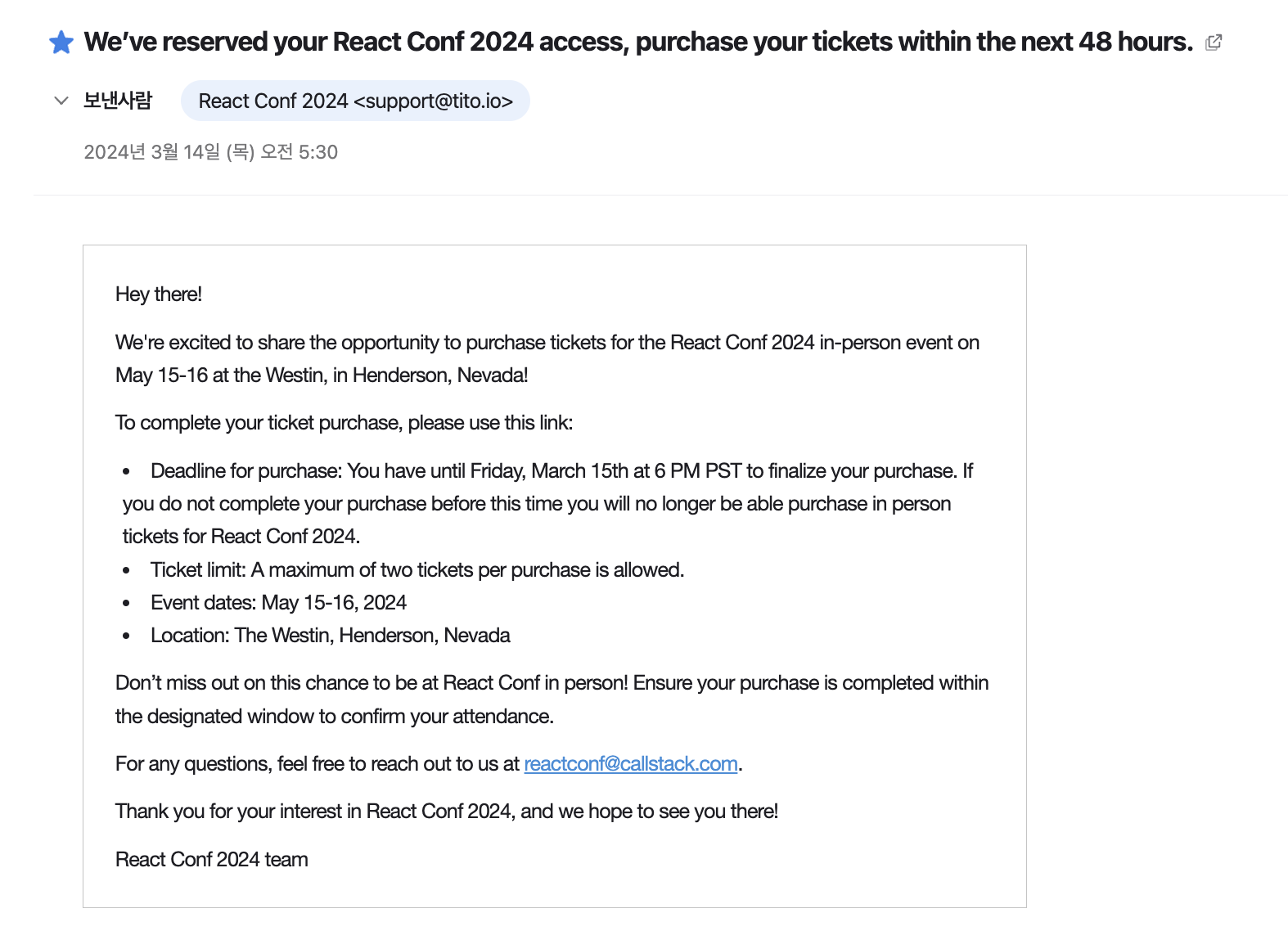
The selection email
It wasn’t a free ticket — it was the opportunity to purchase one.
I had 48 hours to decide, which made me hesitate, but who knows when an opportunity like this would come again, so I decided to go.
It had been years since the conference was held in person, and React 19 seemed like it would be timed to launch around it, which also helped me make up my mind.
The last time I traveled abroad alone for a tech event was Google Cloud Next ‘19 in Tokyo back in 2019. At least that was Tokyo, which is close. This time, I was heading to the United States — a much farther destination.
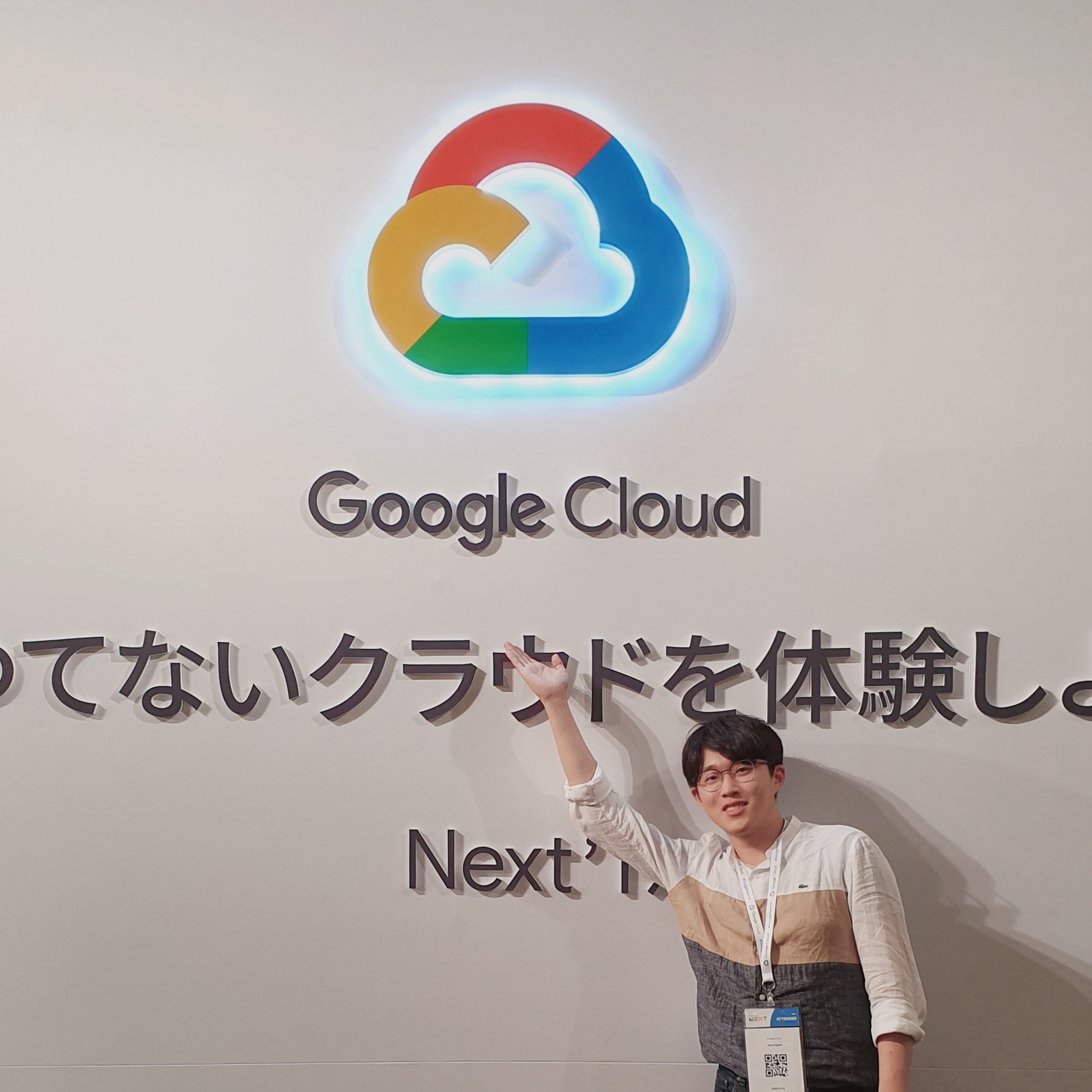
At Google Cloud Next ‘19 in Tokyo
Back then, I went because I wanted to experience a developer conference firsthand, and I made a promise to myself: next time, I’d attend one more closely related to my work. After that, I attended some domestic events, but now I was finally going to an international conference again.
And just like that, I found myself heading to the US two months later.
I decided to fly into San Francisco so I could also check out Silicon Valley while I was at it.
I think I’m in a much better position to absorb things now compared to back then.
Point
This year, the first half has been spent working on the web side of Remember Point.
It was a couple months of work built on top of a Next 14 project, deeply intertwined with server components.
Of course, we may not have been leveraging the app router to its full potential, but it felt like working with two different paradigms while only seeing their projections onto a single plane.
I’ll need to dig deeper into this another time.
This and That
This is the video I placed at the beginning. It’s Elon Musk talking about Starship plans.
He says they plan to build six boosters and Starships this year,
and by next year, construct four “Mechazilla” launch towers that can catch the vehicle mid-air.
He also says they’ll attempt to catch the vehicle with Mechazilla within this year.
As I looked back on what I’d accomplished in the first half of this year and watched this video, I couldn’t help but think: “How can they accomplish so much in such a short amount of time?”
(Granted, the scale and other factors are completely different, but it’s impressive just hearing about it.)
Simplicity Is the Hardest Thing
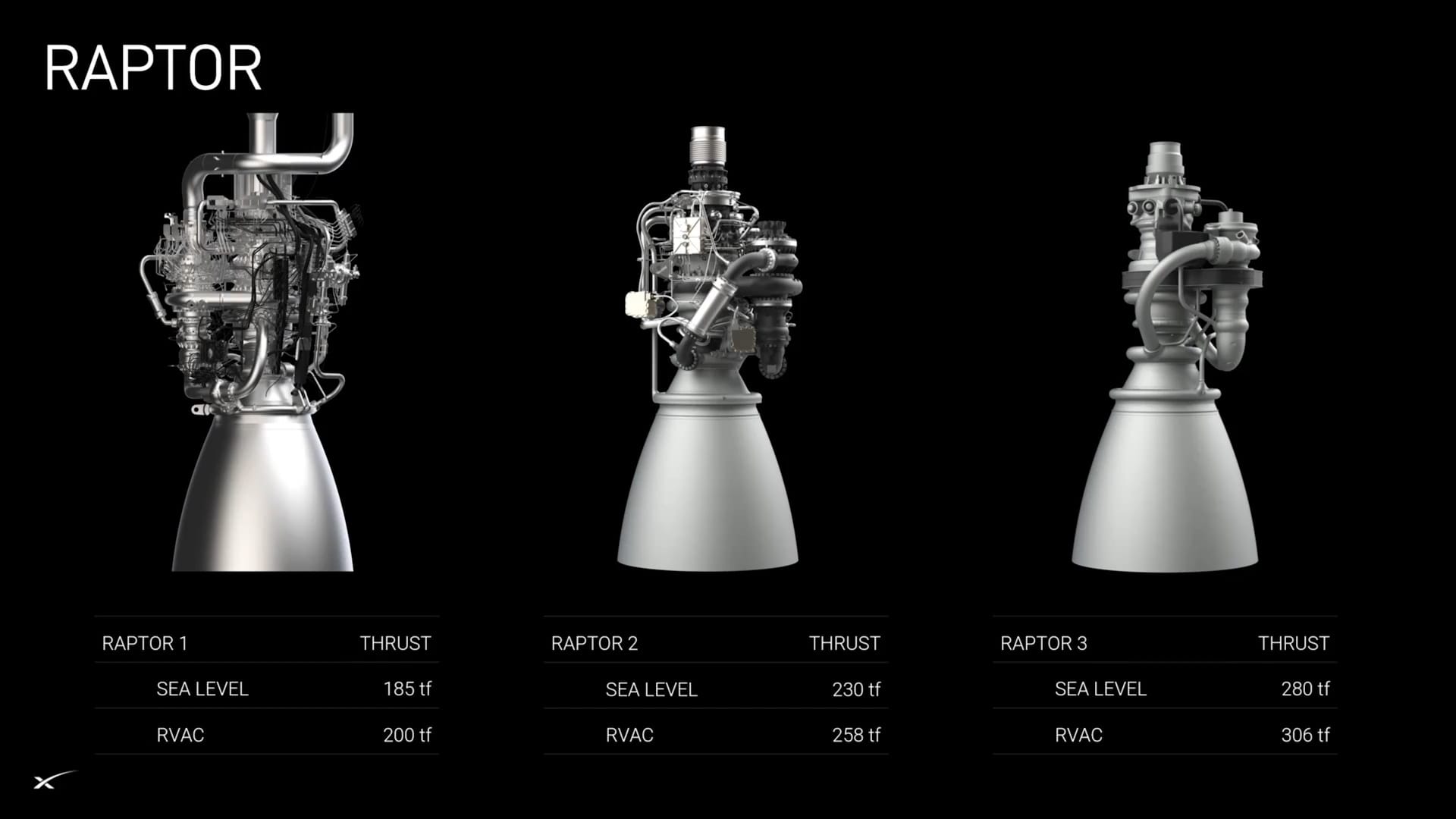
The 3rd-generation Raptor engine
The Raptor engine is now in its third generation. Just looking at the image, you can see how much simpler it looks. Musk himself mentioned that while it looks simple, they actually simplified a great deal of the internals as well.
A lot of complexity is hidden beneath the surface. To achieve that, they removed the heat shield and moved functionality inward.
An interview from 2021.
I think this is a great example of the engineering principles he’s always talked about.
I found a well-organized summary, so I’ll include it here.
Aerospace engineering and programming are different disciplines, but Musk’s engineering principles — coming from someone who was also a developer — are applicable to software engineers as well.
Each principle matters on its own, but the order is what’s important.
When developing software or solving algorithm problems, I often find myself trying to create something perfect from the very start. Looking back, I think there were a few reasons for this:
- Seeing finished code (libraries, existing codebases, etc.) and assuming that polished form just materialized out of thin air
- Trying to write perfect code and ending up spending an infinite amount of time on it
I believe simple code contains far more thought and engineering compressed within it.
I can’t say simplicity is always the best answer, but I think such code isn’t born overnight — it emerges through layers of deliberation and time being compressed down.
Is complex code inherently bad?
I’d say it just hasn’t gone through the process yet.
Complex code is not bad.
At least, that’s how we should think about it.
Rather than fixating on the current state of complexity, we should focus on the process of making it simpler.
Don’t be afraid of complexity — focus on the process and enjoy it.